Showing posts with label Davangere district. Show all posts

Mar 8, 2023

Dodda Bathi Gudda

This is the silhouette of Dodda Bathi Gudda which is situated between Davangere and Harihar cities. On the eastern slope of the hill is a temple dedicated to Sri Revana Siddeshwara, an avatar of Shiva. The shrine is ancient but the temple building has been renovated recently.
shot on Feb 10 2023
At the base of Dodda Bathi Gudda is a village of the same name. The village is surrounded by agricultural land, paddy and sugarcane being the main crops here. Sri Revana Siddeshwara Devastana is the center of Dodda Bathi's social activity. Village people have donated generously and put in great efforts to renovate the temple premises. A community hall with a kitchen & store room have been built, this is for the village people's convenience. Events like weddings and other religious functions are held here. Of course the hall is also utilized during the temple's annual fair. 
.........

Feb 18, 2023

Basaveshwara Devastana, Anekonda, Davangere

This temple had been on my list of temples to see for a few years until the last week of Jan 2023.
January 23, 2023. I left Dharwad around 3-45 AM; by 6-30 I was at Sri Revana Siddeshwara Devasthana, Dodda Bathi; the poojari was preparing for Monday morning pooje; I got a glimpse of the deity; by 6-50 am I was heading towards Davangere town. My next planned stop was Anekonda Basavanna Gudi which is close Davangere food grains market.
It is said that there was a large pond close to this area which was frequented by elephants. So it was called Aanae Honda which eventually transformed to Anekonda.
Monday being Shiva's day, rituals are elaborate. Poojaris at Basavanna temple too were busy preparing for Abhisheka. Again I got a glimpse of the chief deity a Shivalinga. Also a small group of people had come to participate in the Abhisheka, the Garbhagudi was crowded. I started my tour of the temple. This pillared hall is the Sabhamantapa with Sukhanasi, a meeting hall with raised seating platform. The pillars are exquisitely sculpted, similar to the pillars of other Chalukyan temples.
A little further inside is the Ranga Mantapa or the Nritya Mantapa, a square space enclosed by four similar looking columns with a lot of turned sections. 
The ceiling of Ranga Mantapa holds a Navagraha sculptures. The beams supporting the ceiling piece are also elaborately sculpted with miniature temples and divine figures.
The sanctum's brass doorframe is the original multi-tiered stone doorframe. This temple has been renovated with modern materials, but thankfully the stone parts aren't painted or coated with lime. One of the videos on this temple states that this temple was built in the XII Century by a person named Tribhuvana Malla Pandeshwara.
 Flanking the chief sanctum are two relief mantapas; Parvati Devi occupies the mantapa on the left and Subramnya Swami on the right.
This is an east-facing Dwikutachala, a temple with two sanctum, the chief sanctum is east facing (on the right hand side in this picture) and the secondary sanctum is north-facing. The secondary sanctum has no deity in it.
Another view of the Sabha Mantapa and Sukhanasi. Opposite this temple is a smaller shrine dedicated to Nandishwara.
External view of the temple. Adjacent to the main temple is a smaller shrine dedicated to Navagraha.
The smaller shrine dedicated to Nandi. The same video also states that this temple was completely buried in dirt and remained hidden. Then dirt covering the Nandi idol somehow cleared and people started worshipping it. As time passed, the hidden Shiva temple was discovered. I think our ancient temples were intentionally covered in dirt to hide them from Muslim armies. I've heard similar stories of other temples which were under mounds of dirt for centuries before being discovered.

Nandi looking at his Swami with his left eye. Just behind Nandi is another Garbhagudi with a smaller Shivalinga. This arrangement of two Shivalinga, one in front and another behind Nandi is unique, can't remember seeing it anywhere else.

Let's take a quick look around the temple. The sloping canopy and half walls are typically Chalukyan. Ah, canopy slabs have been painted... our people have this craze for painting stones... probably they don't like the raw look of stone.
A portion of the wall has been repaired, stones wall has been replaced with brick & mortar wall. The original walls features three tiers. The bottom most is grooved; the middle tier being miniature mantapas with divine figures and the upper tier featuring humans in various postures separated by pairs of miniature pillars.
The space around the temple is rather tight because the surrounding ground is elevated. I think when the temple was discovered, the dirt was excavated in a way that left the temple sitting in a pit. Now, the design of the external walls is clearly Chalukyan.

This is the northern wall, with a spout projecting from the sanctum.
The temple is at least 4' below the surrounding ground which might have been at the same level originally i.e. when this temple was constructed.
A closer look at the pillars, miniature pillars & mantapas on the external walls. Hoysala walls are slightly different, they have slightly more floral relief works.
A closer look at the Sukhanasi wall. The raw material being sandstone, there's lot of wear & tear. Of the seven characters in the top tier, three from the left seem like hunters and the other four are artists- musicians and dancers. The middle tier are divine figures seated in mantapas. Though the sculptures are damaged, one could identify the characters if studied with patience. One of the dozen plus characters seems to be Ganesha.
This is how the temple looks from the road. Within the premises is a Banni tree, one of the sacred trees.
This is the opposite side. This entrance is more or less in level with the temple floor. This locality, though part of Davangere city, it still retains the rural ambiance. It was peaceful, people going about their morning chores in silence.
This east facing Gopura is the gateway to Anekonda Basaveshwara Devastana is a recent construction. In the Chalukyan culture, the concept of Gopura didn't exist, all the attention was focused on Shikhara. Gopura tradition gained prominence during Vijayanagara times. 
I'd read about another ancient shrine here called "Vishwanatha Devastana" which also had a Kalyani. I tried to get the location of it from local people but the few I spoke to had no knowledge of it. Perhaps its known by a different name. I did not pursue it since I wanted to move on to the next time on my itinerary. People did ask me to check to Kalleshwara Devastana at Yelebethur, which is about 2.5 km from here. I'd already visited it a few years ago, a very nice little temple surrounded by paddy fields and arecanut plantations.
Next on my list was Vani Vilas Sagar, a place I wanted to see since early 80s.
.........

May 22, 2021

ಉಚ್ಚಂಗಿದುರ್ಗ

ಈ ಲೇಖನವು ಆಗಸ್ಟ್ 24, 2013 ರಂದು ಪ್ರಕಟವಾದ ಮೂಲದ ಅನುವಾದಿತ ಆವೃತ್ತಿಯಾಗಿದೆ.
ಉಚ್ಚಂಗಿದುರ್ಗ ಸುಮಾರು ಮೂರು ವರ್ಷಗಳ ಕಾಲ ನನ್ನ ದೃಷ್ಟಿಯಲ್ಲಿದ್ದರು, ಆ ಸ್ಥಳಕ್ಕೆ ಭೇಟಿ ನೀಡಲಾಗಿರಲಿಲ್ಲ. ಹರಪನಹಳ್ಳಿ ತಾಲ್ಲೂಕಿನ  ದಾವಣಗೆರೆಯ ಈಶಾನ್ಯಕ್ಕೆ ಸುಮಾರು 22 ಕಿ.ಮೀ ದೂರದಲ್ಲಿರುವುದು ಉಚ್ಚಂಗಿದುರ್ಗ. ವಿಕಿಮ್ಯಾಪಿಯಾದಲ್ಲಿ ಸಂಶೋಧನೆ ಮಾಡುವಾಗ ಅಲ್ಲಿ ಎರೆಡು ಬೇರೆ ಬೇರೆ ಸುತ್ತು ಗೋಡೆಗಳನ್ನು ಕಂಡೆನು, ಅವೆರಡು ಒಂದು ಕಿಲೋಮೀಟರು ದೂರ ಇದ್ದವು.  ಇದು ಒಂದು ಬೆಟ್ಟದ ಮೇಲೆ ನಿರ್ಮಿಸಲಾದ ಒಂದೇ ಕೋಟೆ ಎಂದು ನಾನು ಭಾವಿಸಿದೆ. ಉಚಂಗಿದುರ್ಗವು ಉಚಂಗಮ್ಮ ದೇವಸ್ಥಾನಕ್ಕೆ ಜನಪ್ರಿಯವಾಗಿದೆ, ಆದರೆ ಇಲ್ಲಿ ನನ್ನ ಆಸಕ್ತಿ ಕೋಟೆಯ ಇತಿಹಾಸ.. ಈ ದೇವಸ್ತನವು ಬೆಟ್ಟದ ತುದಿಯಲ್ಲಿದೆ. ದೇವಾಲಯದ ದೇವತೆಯನ್ನು ಉತ್ತಂಗಿ ದುರ್ಗಾ ಮತ್ತು ಬೆಟ್ಟವನ್ನು ಉಚುಂಗಿ ಬೆಟ್ಟ ಎಂದೂ ಕರೆಯುತ್ತಾರೆ.
ಮಾರ್ಚ್ 6, 2013
ದೊಡ್ಡ ಬಾತಿ ಬೆಟ್ಟದಲ್ಲಿರುವ ಶ್ರೀ ರೇವನಸಿದ್ದೇಶ್ವರ ದೇವಸ್ಥಾನದ ಅಂಗಳದಲ್ಲಿ ಮುಂಜಾನೆ ಉಪಹಾರ ಮಾಡಿ ನಾವು ನಮ್ಮ ಪ್ರಯಾಣವನ್ನು ಪುನರಾರಂಭಿಸಿದೆವು. ದಾವಣಗೆರೆಯಲ್ಲಿ, ನಾನು ಮಾರುಕಟ್ಟೆ ಮಾರ್ಗವನ್ನು ಮೂಲಕ ಹೋಗಿ ನಾವು ತಪ್ಪು ಮಾಡಿದೆ; ಬದಲಾಗಿ ನಾವು ಹೊಸ ಬಸ್ ನಿಲ್ದಾಣದವರೆಗೆ ಮುಖ್ಯ ರಸ್ತೆಯ ಮೂಲಕ ಹೋಗಿ ನಂತರ ಉಚ್ಚಂಗಿದುರ್ಗದ ಕಡೆಗೆ ಎಡಕ್ಕೆ ತಿರುಗಬಹುದಿತ್ತು. ದಾವಣಗೆರೆಯಿಂದ ನಮ್ಮ ಪ್ರಯಾಣ ಸುಗಮವಾಗಿತ್ತು.  ಉಚ್ಚಂಡಿದುರ್ಗ ಇನ್ನು ಹತ್ತು ಕಿಲೋಮೀಟರ್ ಇರುವಾಗ ಬೆಟ್ಟ ಕಂಡಿತು. ದಾವಣಗೆರೆಯಿಂದ ಹೋಗುವಾಗ ನಾವು ಬೆಟ್ಟದ ಪಶ್ಚಿಮ ಮುಖವನ್ನು ನೋಡುತ್ತೇವೆ ಆದರೆ ಬೆಟ್ಟದ ಮೇಲೆ ಹೋಗುವ ರಸ್ತೆ ಪೂರ್ವ ಮುಖದಲ್ಲಿದೆ.

ಬೆಟ್ಟದ ಮೇಲಿನ ರಸ್ತೆ ಸುಮಾರು 800 ಮೀ ಉದ್ದವಿದೆ. ರಸ್ತೆಯು ಬೆಟ್ಟದ ಪೂರ್ವ ಮುಖದಲ್ಲಿರುವ ಹೆಬ್ಬಾಗಿಲನ ತನಕ ಹೋಗುತ್ತದೆ. ವಾಹನಗಳನ್ನ ಇಲ್ಲೇ ನಿಲ್ಲಿಸು, ಇಲ್ಲಿಂದ ಬೆಟ್ಟದ ತುದಿಯಲ್ಲಿರುವ ದೇವಸ್ಥಾನಕ್ಕೆ ನಡೆದುಕೊಂಡು ಹೋಗಬೇಕು.
ನಾವು ಬೆಟ್ಟದ ನಡುವಿನಲ್ಲಿದ್ದೇವೆ. ಬಲಭಾಗದಲ್ಲಿ ಕಾಣುವುದು ಒಳಗಿನ ಕೋಟೆ. ಈ ಕೋಟೆಗೆ ಹಲವಾರು ಸುತ್ತುಗಳಿವೆಯಂದು ತೋರುತ್ತದೆ. 

ಸುತ್ತಮುತ್ತಲಿನ ಉತ್ತಮ ನೋಟವನ್ನು ಪಡೆಯಲು ನಾವು ಇತರ ಶಿಖರವನ್ನು ಏರುತ್ತೇವೆ. ಈ ಬೇಟಕ್ಕೆ ಎರೆಡು ಶಿಖರಗಳಿವೆ, ಎದುರಿಗೆ ಕಾಣುವುದು ಒಂದು ಶಿಖರ, ಮತ್ತೊಂದು ನಮ್ಮ ಹಿಂದೆ ಇದೆ. ಹಿಂದಿರುವ ಶಿಖರವು ಚಿಕ್ಕದು, ಅದನ್ನು ಏರಿದಿವು.  ಕೆಳಗಿನ ಈ ಚಿತ್ರದಲ್ಲಿ ನೀವು ಮೂರು ಹೆಬ್ಬಾಗಿಲುಗಳನ್ನು ನೋಡಬಹುದು.

ಇದು ಬೆಟ್ಟದ ಪಶ್ಚಿಮ ಮುಖ ಮತ್ತು ಅದರ ಮೇಲಿರುವ ಕೋಟೆಯ ಅವಶೇಷಗಳು.

ಇದು ದಕ್ಷಿಣ ಕಡೆಯ ನೋಟ; ಇಲ್ಲಿ ಮತ್ತೊಂದು ಗುಡ್ಡದ ಮೇಲೆ ಕೋಟೆ ಗೋಡೆಗಳನ್ನು ಕಾಣಬಹುದು. ಆ ಕೋಟೆ ಉಚಂಗಿದುರ್ಗದ ಒಂದು ಭಾಗವೇ ಎಂದು ನನಗೆ ಅನುಮಾನ ಬಂತು. ಕೆಳಗಿನ ಬಲಭಾಗದಲ್ಲಿ ಹಲವಾರು ಗೋರಿಗಳು, ಗ್ರಾನೈಟ್ ಚಪ್ಪಡಿಗಳಿಂದ ಮಾಡಿದ ಸರಳ ಗೋರಿಗಳು ಇದ್ದವು ಆದರೆ ಅದು ಪ್ರಾಚೀನವೆಂದು ತೋರುತ್ತದೆ. ನಾವು ಕೆಳಗಿಳಿಯುವ ಸಾಹಸ ಮಾಡಲಿಲ್ಲ.

ಇದು ಇನ್ನೊಂದು ಶಿಖರ, ಆ ಗೋಪುರದವರೆಗೆ ಗೋಡೆಯು ಕಾಣಿಸುತ್ತದೆ. ಗೋಪುರದ ಸ್ವಲ್ಪ ಕೆಳಗೆ ಒಂದು ಸಣ್ಣ ದೇವಾಲಯವನ್ನು ಕಾಣಬಹುದು.

ಉಚಂಗಿದುರ್ಗ ಖಂಡಿತವಾಗಿಯೂ ಒಂದು ಪ್ರಮುಖ ಕೇಂದ್ರವಾಗಿತ್ತು, ಬೆಟ್ಟವು ಸುತ್ತಮುತ್ತಲಿನ ಬಯಲು ಪ್ರದೇಶಗಳ ನೋಟವನ್ನು ವಿವರವಾಗಿ ನೀಡುತ್ತದೆ. ಬಹುಶಃ ಇದು ಈ ಪ್ರದೇಶದಲ್ಲಿ ತೆರಿಗೆ ಸಂಗ್ರಹ ಕೇಂದ್ರವಾಗಿತ್ತು.

ಎರಡನೆಯ ಶಿಖರವು ಮೊದಲ ಶಿಖರದ ಸ್ಪಷ್ಟ ನೋಟವನ್ನು ನೀಡುತ್ತದೆ, ಆದ್ದರಿಂದ ಇದು ವಾಚ್ ಟವರ್ ಆಗಿ ಕಾರ್ಯನಿರ್ವಹಿಸುತ್ತಿತ್ತು. ಈ ಕೋಟೆಯ ಮೇಲೆ ದಾಳಿ ಮಾಡುವುದು ಸುಲಭವಲ್ಲ.

ಅದು ಮೇಲ್ಭಾಗದಲ್ಲಿರುವ ಉಚಂಗಮ್ಮ ದೇವಸ್ಥಾನ. ದುಃಖಕರವೆಂದರೆ ರಚನೆಯು ಆಧುನಿಕವಾಗಿದೆ ಮತ್ತು ಹಲವು ವಿಸ್ತರಣೆಗಳನ್ನು ಹೊಂದಿದೆ. ಬಲಭಾಗದಲ್ಲಿ ಒಳಗಿನ ಕೋಟೆಯ ಗೋಪುರವಿದೆ.

ಅವಲೋಕನವನ್ನು ನೋಡಿದ ನಾವು ಶಿಖರವನ್ನು ಇಳಿದು ಹೆಬ್ಬಾಗಿಲಕಡೆ ಬಂದು ದೇವಸ್ಥಾನದ ಕಡೆ ಹೊರಟೆವು. ಪ್ರಾಚೀನ ಮೆಟ್ಟಿಲು ನಮ್ಮ ಏರಿಕೆಯನ್ನು ಸುಲಭಗೊಳಿಸುತ್ತದೆ. ಕೋಟೆಯ ಈ ಭಾಗವನ್ನು ನಿಗಾವಹಿಸಿ ಕಾಪಾಡಲಾಗಿದೆ, ಈ ಪ್ರಯತ್ನ  ಮಾಡಿದ ಜನರಿಗೆ ಧನ್ಯವಾದಗಳು. ಇಲ್ಲಿಯ ಬುರುಜುಗಳು ಚೌಕಾಕಾರವಾಗಿದ್ದು, ಈ ಬೆಟ್ಟದ ಮೇಲೆ ವಿಶಿಷ್ಟವಾದ ವೃತ್ತಾಕಾರದ ಬುರುಜುಗಳು ಕಂಡುಬರುವುದಿಲ್ಲ.

ನಾವು ಈ ಹೆಬ್ಬಾಗಿಲ ಮೂಲಕ ಹೋಗುತ್ತಿರುವಾಗ, ಗಮನಿಸಿದ್ದೇನೆಂದರೆ, ಯಾತ್ರಾರ್ಥಿಗಳು ಬಾಳೆಯ ಹಣ್ಣನ್ನು ಹೆಬ್ಬಾಗಿಲಿನ ಎರಡು ಕಡೆಗೆ ಹಚ್ಚಿ ತಿಕ್ಕಿರುವದರಿಂದ ಅಲ್ಲಿ ಹಳದಿ ಕಲೆಗಳಾಗಿರುವದು. ಇದು ಇಲ್ಲಿಯ ಪದ್ಧತಿಯಾಗಿಬಿಟ್ಟಿದೆ.

ಈ ಚಿತ್ರದಲ್ಲಿ ಕಾಣುತ್ತಿರುವದು ಮುಂದಿನ ಹೆಬ್ಬಾಗಿಲು. ಈ ಬೆಟ್ಟವು ಶುಷ್ಕ ಮತ್ತು ಬಂಜರಾಗಿ ಕಾಣುತ್ತದೆ, ಇದು ಕಳೆದ ಕೆಲವು ವರ್ಷಗಳ ಬರಗಾಲದ ಪರಿಣಾಮವಾಗಿದೆ.

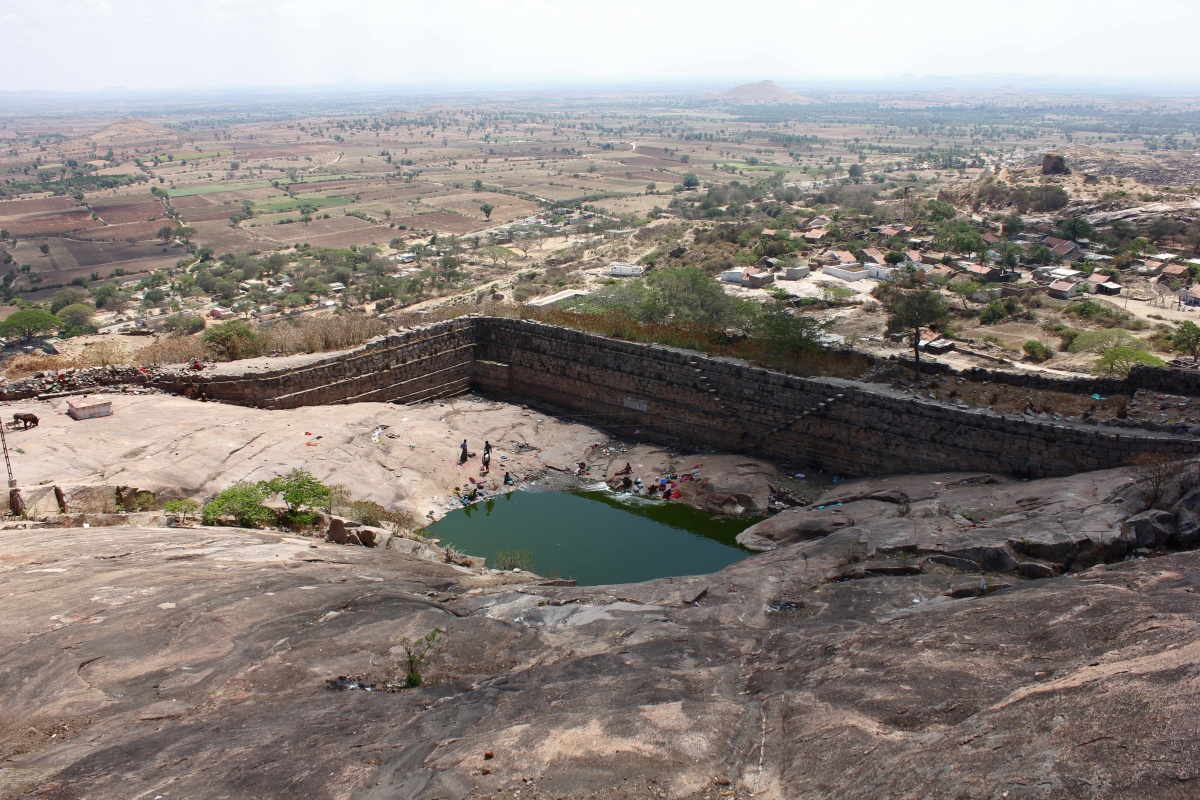
ಬೃಹದಾಕಾರದ ನೀರಿನ ಟ್ಯಾಂಕ್. ಅಲ್ಲಿಯ ಜನರಿಗೆ ಇದು ಪ್ರಮುಖ ಜಲ ಮೂಲವಾಗಿದೆ. ಮೊದಲೂ ಕೂಡ ಕೋಟೆಯ ಜನರಿಗೆ ಇದೆ ನೀರಿನ ಮೂಲವಾಗಿರಬಹುದು ಮತ್ತು ವರ್ಷವಿಡೀ ನೀರಿಗೇನು ಕೊರತೆ ಬರುತ್ತಿರಲಿಲ್ಲವೆನಿಸುತ್ತದೆ.

ನಾವು ವಿರಳವಾದ ಒಂದು ದೃಶ್ಯ ಕಂಡೆವು; ಕತ್ತೆಗಳ ಗುಂಪು, ದುಃಖದ ಸಂಗತಿ ಎಂದರೆ ಅವುಗಳಿಗೆ ಮೇಯಲು ಏನು ಇಲ್ಲ ಇಲ್ಲಿ. ಬಹುಶ ಇವು ಅಗಸರ ಕತ್ತೆಗಳಿರಬೇಕು. ನಾವು ಕೋಟೆಯ ತುದಿ ತಲುಪಿದೆವು. ಎಡಗಡೆ ಕೋಟೆಯೊಳಗೆ ಮತ್ತೊಂದು ಕೋಟೆಯಿದೆ. ಈ ಕೋಟೆಯು ವೃತ್ತಾಕಾರದ ಬುರುಜುಗಳನ್ನು ಹೊಂದಿದೆ. ಈ ಕಟ್ಟಡ ಚೌಕಾಕಾರದ ಬುರುಜುಗಳಿಗಿಂತ ಹಳೆಯದು. ನನಗನಿಸಿದಂತೆ ಇದು ವಿಜಯನಗರ ಕಾಲದ್ದಾಗಿರಬಹುದು.

ಈ ಹಳೆಯ ಕಟ್ಟಡವನ್ನು ದಾಟಿ ಒಳನಡೆದರೆ, ಹೊಸ ಕಟ್ಟಡವನ್ನು ಕಾಣಬಹುದು. ಇದು ಕೆಲವು ಮುಸ್ಲಿಂ ಆಡಳಿತಗಾರರ ಸೇರ್ಪಡೆಯಂತೆ ತೋರುತ್ತದೆ. ಎಡಭಾಗದಲ್ಲಿ, ದೇವಾಲಯದ ಒಂದು ಭಾಗವು ಗೋಚರಿಸುತ್ತದೆ ಮತ್ತು ದೇವಾಲಯದ ಹಾದಿಯು ಬಲಭಾಗದಲ್ಲಿದೆ, ಆ ತೆಳ್ಳಗೆ ಕಾಣುವ ಲೋಹೀಯ ಕಮಾನು ಅಡಿಯಲ್ಲಿ.

ಎರಡು ಕೋಟೆಗಳ ಮಧ್ಯ ಈ ವಿಗ್ರಹವಿತ್ತು. ಕೋಟೆಯ ನಿವಾಸಿಗಳಲ್ಲಿ ಒಬ್ಬರು ನನಗೆ ಹೇಳುವವರೆಗೂ ಅದು ಆಂಜನೇಯನ ಮೂರ್ತಿ ಎಂದು ನನಗೆ ಊಹಿಸಲೂ ಸಾಧ್ಯವಾಗಲಿಲ್ಲ. ಆಂಜನೇಯನು ತನ್ನ ಎಡಗೈಯಲ್ಲಿ ಸಂಜೀವಿನಿ ಪರ್ವತವನ್ನು ಹೊತ್ತುಕೊಂಡು ಹೋಗುತ್ತಿದ್ದಾನೆ. ಕೆಲವು ದಿನಗಳ ಹಿಂದೆ ನಡೆದ ವಾರ್ಷಿಕ ಜಾತ್ರೆಯಲ್ಲಿ ಇದನ್ನು ರಚಿಸಲಾಗಿದೆ. ಜಾತ್ರೆಯ ಸಮಯದಲ್ಲಿ ಈ ಸ್ಥಳವು ಜನಗಳಿಂದ ಕಿಕ್ಕಿರಿದಿರುತ್ತದೆ.

ನಾವು ಒಳಗಿನ ಕೋಟೆಯ ಸುತ್ತಲೂ ಹೋಗುವಾಗ, ಇಲ್ಲಿ ಒಂದು ಸಣ್ಣ ಪಟ್ಟಣವನ್ನು ನೋಡಿದೆವು, ಸಣ್ಣ ಮನೆಗಳು ಒಟ್ಟಿಗೆ ತುಂಬಿವೆ. ಇಲ್ಲಿ ಒಂದು ಬಾಲವಾಡಿ ಕೂಡ ಇದೆ! ನಾವು ಬಾಲವಾಡಿಯ ಹಿಂದೆ ನಡೆದು ಹೋದೆವು, ಮಕ್ಕಳು ಟೀಚರ್ ಹಾಡಿದಂತೆ ಹಾಡುತ್ತಿದ್ದವು. ಕೋಟೆಯ ಒಳಭಾಗವು ಕೇವಲ ತೆರೆದ ಸ್ಥಳವಾಗಿದೆ, ನಡುವಿನಲ್ಲಿ ಒಂದು ಶಿವಲಿಂಗು ಮತ್ತು ಕಲ್ಲಿನ ಚೆಂಡುಗಳ ಗುಂಪಿನೊಂದಿದೆ. ಕಲ್ಲಿನ ಚಂಡುಗಳು ಸುಮಾರು ೧೫ ಕೆಜಿ ತೂಕವಿದ್ದವು.

ಅದು ದೇವಾಲಯ; ತುಂಬಾ ಕಾಂಕ್ರೀಟ್ ಮತ್ತು ಕಳಪೆ ಗುಣಮಟ್ಟದ ನಿರ್ಮಾಣವನ್ನು ನೋಡಲು ತುಂಬಾ ನಿರಾಶಾದಾಯಕವಾಗಿದೆ :-( ಜನರು ಸೌಂದರ್ಯವನ್ನು ಸರಳತೆಯಿಂದ ನೋಡಲು ಕಲಿಯಬೇಕೆಂದು ನಾನು ಬಯಸುತ್ತೇನೆ .. ನಮ್ಮ ಪೂರ್ವಜರಂತೆ.

ದೇವಾಲಯದ ಆವರಣದೊಳಗೆ ಛಾಯಾಗ್ರಹಣವನ್ನು ನಿಷೇಧಿಸಲಾಗಿದೆ. ಇತ್ತೀಚಿನ ಜಾತ್ರೆಯ ಪರಿಣಾಮವಾಗಿ ನೆಲವು ಎಣ್ಣೆಯುಕ್ತವಾಗಿತ್ತು. ನೋಡಿದರೆ ಇಲ್ಲಿ ಸ್ವಚ್ಛತೆಗೆ ಅಷ್ಟು ಪ್ರಾಮುಖ್ಯತೆ ಕೊಡುವದಿಲ್ಲವೆಂದು ಕಾಣುತ್ತದೆ. ಹೇಗಾದರಾಗಲಿ , ನಾವು ದೇವಿಯ ಉತ್ತಮ ದರ್ಶನ ಪಡೆದು ಸ್ವಲ್ಪ ಹೊತ್ತು ಅಲ್ಲಿಯೇ ಇದ್ದು, ತಂಪಾದ ಗಾಳಿ ಮತ್ತು ಸುತ್ತಮುತ್ತಲಿನ ಬಯಲು ಪ್ರದೇಶಗಳ ನೋಟವನ್ನು ಆನಂದಿಸಿದೆವು.

ಅಷ್ಟೊತ್ತಿಗಾಗಲೇ ನಾವು ಹೊರಡುವ ಸಮಯವಾಗಿತ್ತು, ಅಲ್ಲದೆ ನಾವಿನ್ನು ಮುಂದೆ ಮೂರು ಕೋಟೆಗಳನ್ನು -  ಕರಡಿದುರ್ಗ, ಉಚ್ಚನ್ಯಾಗಿಪುರ ಮತ್ತು ಕಣಕುಪ್ಪೆ - ನೋಡುವ ಯೋಜನೆಯನ್ನು ಹಾಕಿಕೊಂಡಿದ್ದೆವು. ನಾವು ಕರಡಿದುರ್ಗದ ಕಡೆಗೆ ನಮ್ಮ ಕ್ಯಾಬನ್ನು ನಡೆಸಲು ಹೇಳಿದೆವು.

ಉಚಂಗಿಪುರದಿಂದ ಕಾಣುವ ಉಚಂಗಿದುರ್ಗ ಬೆಟ್ಟದ ದೃಶ್ಯ 

.........

Aug 8, 2020

Kalleshvara Devastana, Bagali - part 4

..continued from Kalleshvara Gudi, Bagali part-3, where we saw sensual artwork among other sculptures. We continue seeing the exterior of the main temple. This southern side of the temple, as you enter this door, the Garbhagudi is on the left hand side. The crown over this door is brick & mortar probably added during Hoysala or Vijayanagara period. The lion is a nice touch to the crown.

The seven layer door frame dominates this side. Gajalakshmi adorns the forehead of the frame. The base has Dwarapalas on both sides. The middle layer i.e. the 4th layer looks like columns. If one starts counting the number of individual characters (humans, animals, theriocephalic creatures and hybrid beasts) it would take a couple of hours.

Over the door frame is a series of five images of which four are placed in Mantapas with triangular crowns. This is the first time I'm seeing triangular crowns unless I've missed noticing in other temples. This is a beautiful design. Each crown consists three equilateral triangles, one big and two smaller. The smaller triangles' sides can't be more than 3 inches wide. The precision is amazing. Our sculptures were not some primitive people, they surely possessed vast knowledge which included mathematics, anatomy and architecture. The first idol is Lord Ganesha. The second one is a musician playing a drum and the third one is an archer.

A close look at the seven layers. The middle layer looks like bamboo shoot. The outer most later looks like bones.. that's how I see it. It could be anything else. Do share your thought.

Moving to the let of the door frame are few tiny sculptures of Shivalinga and a standing character which could be Eshwara. The Shivalinga are covered with small spheres which could be Rudrakshi.

This set consists of sitting Ganesh & Mushak, Mahishamardini and three characters which I fail to recognize. The frail looking character is quite intriguing. It looks like an old woman. Scary looking old woman it is.

Here we have Gajasurasamhara - the scene of Gajasura being slain by Shiva. The other images also seem to be of Shiva the ascetic, Shiva & Parvati and, of course Nandi has to be present where Shiva is.

Here's an example of pre-sculpting outline. The sketch shows a man apparently poking a long object into the horse's head. This was seen on the northern wall of the temple.

This temple has lot of inscriptions. This was found on the wall next to the southern entrance (near the grand door frame). The text is italicized. Our ancient writers wrote italicized text, nice isn't it? The other inscriptions are small lines of text close to the images, probably signatures of the sculptors.

Lastly, this is a north-facing temple with a sloping roof and stepped-pyramid Shikhara is dedicated to Veerabhadra Devastana. The idol of Veerbhadra (a form of Shiva) is well preserved (see inset). In the front are two slabs with inscriptions and one hero-stone.

A closer look at the hero-stone. Its dedicated to two brave men who laid down their lives to protect cattle from enemies. In those times, besides land and gold, cattle was also precious. In fact cattle was currency in ancient societies. The bottom most panel shows the men defending their cattle from a an armed group. In the middle panel, they are being carried to the upper world by fairies. In the uppermost panel shows the two being accepted and given a place. That's how society showed gratitude to service and kept memories alive.

I would've loverd to spend more time at this temple but I'd to eat lunch and then reach Hubli by 5-00 PM. I was happy to have covered all the places on my itinerary. As I drove on the embankment, temple & fields on the right and water tank on the left, a ruined stone structure caught my eyes.

It looked a temple. The ruins is a dump yard, quite filthy there. Wish ASI had taken it under their care. At least fence it and keep out vandals.

I drove back to Harpanhalli, took Guttal road, found a nice tamarind tree by the road, parked under it, ate bread-cheese-tomato-cucumber and resumed my journey. The journey between Guttal and Haveri was slow, thanks to speed bumps every few kilometers. It was 3-45 PM when I passed through Haveri. By 5-30 I was at Siddharoodha Matha (Hubli). I was glad to have kept my word to catch up with Pushpa here.
.........