Dec 16, 2011
Driving on Pattadakal-Aihole road, about a kilometer before Aihole you can see a dirt road and an arch on your left hand side. Less than half kilometer away are Ramlingesvara and Galaganatha groups of temples, on the bank of Malaprabha where the river flows South to North. Few tourists visit these temples.

Ramlingesvara temple complex has a tall shed, for it's theru. Presence of a theru is an indication that pooja is performed and an annual fair is also happens. An arch to welcomes visitors.

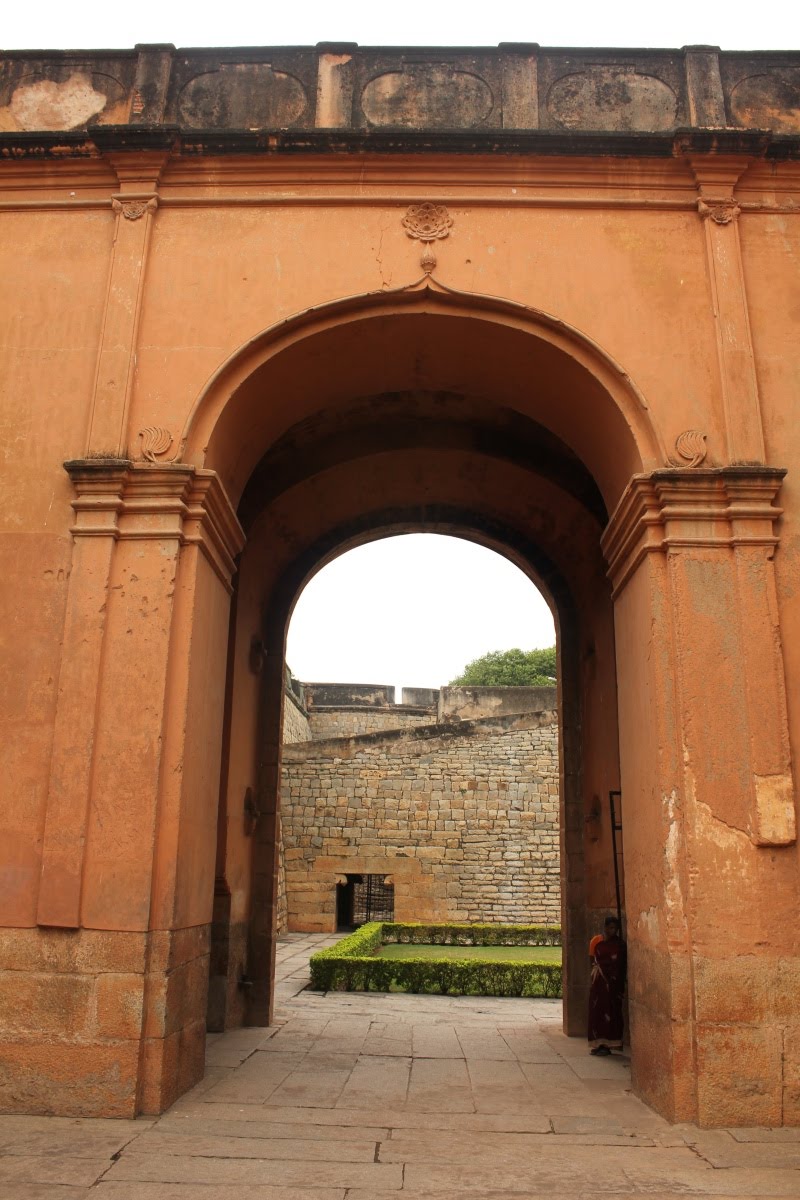
The arch as seen from inside.

River Malaprabha and Basavanna on a pedestal. Notice the small Shivalinga near Basavanna's feet?

A gateway to reach Malaprabha waters and an mantapa where visitors could rest.
.

Mantapa seems to be pretty old.

A dooway? Does it mean the mantapa had some kind of walls?

Few small temples; these remind me of shrines in Huligyammanakolla.

Temple with pyramid shaped Shikhara.

Sculpture of three pairs of feet. A family of husband, wife and a kid? Or is it Rama, Sita and Lakshmana.

This is the main temple- Ramlingesvara Gudi has two garbhagudis. The temple doors were locked, I could not see anyone here to ask for information. The temple's sloping front seems to be a Kadamba touch. Rituals are performed here daily.

Basavanna facing the Garbhagudi. Holy ash ~ Angara is kept in the stone-cut bowl with a pedestal.

A large stone bowl. No idea what this was used for.
 Back side of the temple.

Another temple dedicated to Shiva Linga.

Temple's interior.

This place reminds me of Hunasikatti near Kittur. Malaprabha flows South-North there also. I head back the way I came, towards Galaganatha temple complex, about 250m away.
Ramlingesvara Temple Complex Coordinates: 16°0'26"N 75°52'44"E
.........
Driving on Pattadakal-Aihole road, about a kilometer before Aihole you can see a dirt road and an arch on your left hand side. Less than half kilometer away are Ramlingesvara and Galaganatha groups of temples, on the bank of Malaprabha where the river flows South to North. Few tourists visit these temples.

Ramlingesvara temple complex has a tall shed, for it's theru. Presence of a theru is an indication that pooja is performed and an annual fair is also happens. An arch to welcomes visitors.

The arch as seen from inside.

River Malaprabha and Basavanna on a pedestal. Notice the small Shivalinga near Basavanna's feet?

A gateway to reach Malaprabha waters and an mantapa where visitors could rest.
.

Mantapa seems to be pretty old.

A dooway? Does it mean the mantapa had some kind of walls?

Few small temples; these remind me of shrines in Huligyammanakolla.

Temple with pyramid shaped Shikhara.

Sculpture of three pairs of feet. A family of husband, wife and a kid? Or is it Rama, Sita and Lakshmana.

This is the main temple- Ramlingesvara Gudi has two garbhagudis. The temple doors were locked, I could not see anyone here to ask for information. The temple's sloping front seems to be a Kadamba touch. Rituals are performed here daily.

Basavanna facing the Garbhagudi. Holy ash ~ Angara is kept in the stone-cut bowl with a pedestal.

A large stone bowl. No idea what this was used for.
 Back side of the temple.
Another temple dedicated to Shiva Linga.

Temple's interior.

This place reminds me of Hunasikatti near Kittur. Malaprabha flows South-North there also. I head back the way I came, towards Galaganatha temple complex, about 250m away.
Ramlingesvara Temple Complex Coordinates: 16°0'26"N 75°52'44"E
.........